
POSTED
November 3, 2026
“Dignified Menstruation is not only about menstrual bleeding. It is about human dignity, equality, and changing how our society treats people: through respect, inclusion, and the realisation of human rights.”
—Budhadev Chaudhary, Ward Chairperson, Lalbandi Municipality in Nepal
Have you heard about ‘menstrual health and dignity’? You may have heard about ‘menstrual health and hygiene’ or ‘menstrual hygiene management’. So why is the Sang pour Sang Uni·e·s pour la Dignité project now bringing forward the term ‘menstrual health and dignity’?
Evidence from the Sang pour Sang baseline report shows that only talking about menstruation through products, hygiene or school attendance misses a huge amount of what people experience on their periods. While existing definitions of menstrual health have helped advance menstruation as a public health issue, they do not fully capture the rights-based dimensions of menstruation, including stigma, discrimination, exclusion, and barriers to participation. This is why as the Sang pour Sang Uni·e·s pour la Dignité project, we have developed a new positioning brief on menstrual health and dignity to we propose a complementary definition of menstrual health and dignity that centres dignity, autonomy, participation, and human rights. The brief also urges policymakers, institutions, funders and development actors to implement rights-based, inclusive, and well-resourced approaches to menstrual health and dignity.
Everyone who menstruates deserves to live with dignity, autonomy, and full participation in society. Yet in 2026, a period remains far more than a monthly event for most people: it still shapes where they can go, what they can do and how they are treated.
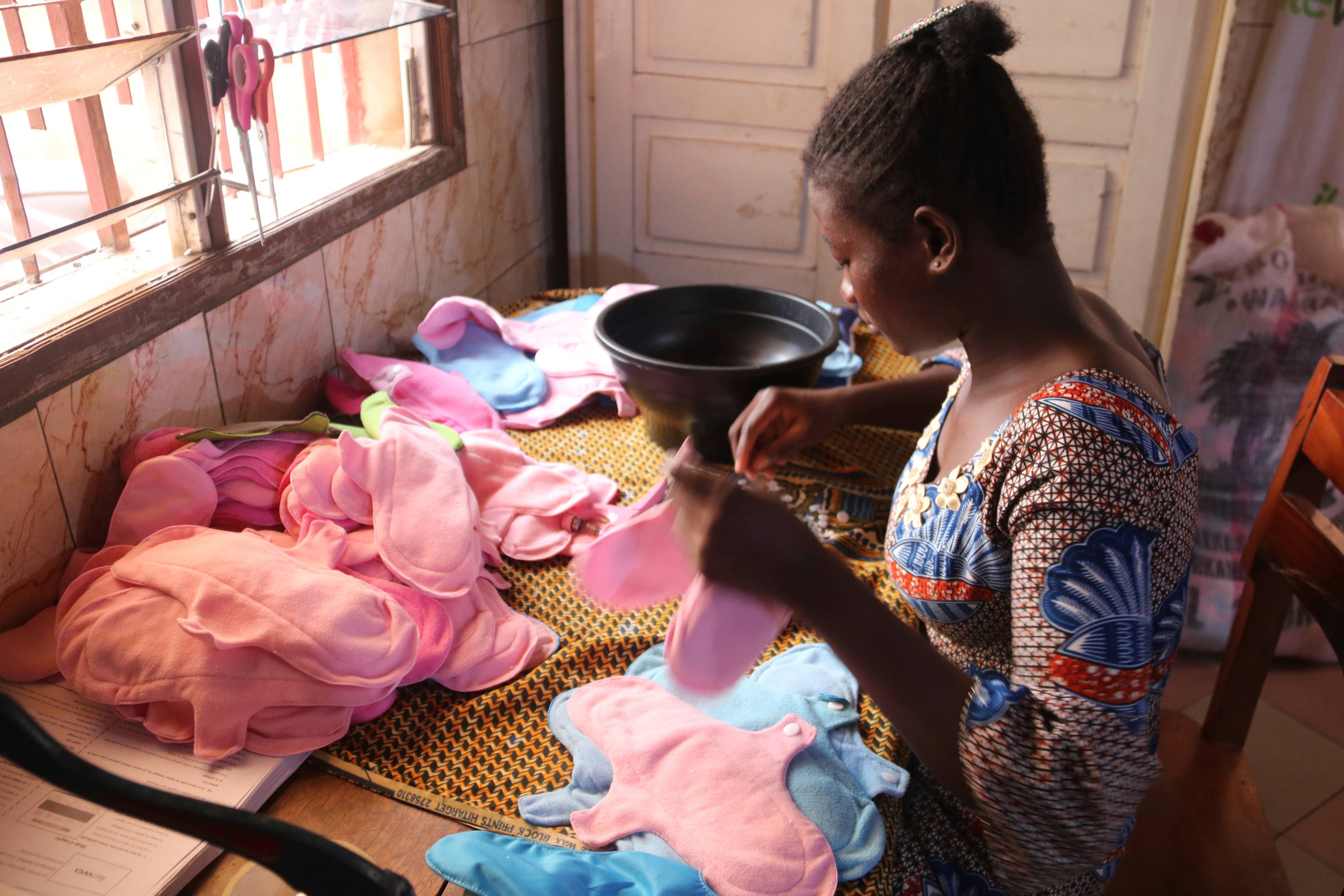
Around the world, millions of people menstruate every month – a natural biological process. Yet, despite this, 1.72 billion people across the Global South experience menstrual discrimination. Evidence from the Sang pour Sang Uni·e·s pour la Dignité baseline report details how across 9 countries, 93% of menstruators reported menstrual discrimination through exclusion from daily activities and/or menstruation-related teasing.
More than half reported restrictions during their most recent period, including being unable to touch certain objects, sleep in particular places, participate in physical activities, enter certain spaces within the home, attend religious events, or socialise as they normally would. These findings demonstrate that menstrual discrimination extends far beyond the management of menstruation itself and affects multiple dimensions of daily life, participation, and wellbeing.
70% of the menstruators we surveyed believed that menstruation is dirty or impure. Among men and boys, 52% had witnessed discrimination against menstruators, but only 8% had stepped in. Menstrual discrimination is a social issue that involves everyone, not only the people who menstruate.
So, what is actually ‘menstrual health and dignity’? In our positioning brief, we define menstrual health and dignity as:
A state in which all people can manage their menstruation safely, comfortably, confidently and without stigma, fear, or discrimination across all stages of their life course, from first menstruation to menopause. This means having access to the information, products, services, and support they need; being able to participate fully in daily life; and having control over their bodies, with these conditions recognised as fundamental human rights.
Across the nine countries of Sang pour Sang, partners are showing what the menstrual health and dignity approach can achieve. In Pakistan, Mahwari Justice combined strategic litigation with grassroots mobilisation, including over 10,000 signatures, to challenge the luxury tax on menstrual products, which has now been removed. While, in Guinea, ELLES de Guinée, has been working with adolescent girls, parents, teachers, and community leaders to challenge harmful myths and create safe spaces for dialogue. This has resulted in parents becoming more supportive, girls increasingly attending school during menstruation, and discussions about periods becoming more open.

Addressing menstrual health and dignity is a time-sensitive priority with significant implications for individuals, communities, economies and broader development outcomes. In our newly released positioning brief, we outline recommendations and call on policymakers, institutions, funders and development actors to implement rights-based, inclusive, and well-resourced approaches to menstrual health and dignity.
Read and share the full positioning brief here in English, French and Spanish.
The Sang pour Sang Uni·e·s pour la Dignité project works across nine countries to address menstrual discrimination and champion menstrual health and dignity. The consortium comprises Fòs Feminista, Equipop, the Global South Coalition for Dignified Menstruation, and PSI Europe, and is funded by the Agence Française de Développement (AFD).


You will be redirected in 5 seconds.


